
Newsletter; March 2025
THE GREEN COLUMN
On Valentine’s Day, FORTASBI Invites 10 Journalists to Visit the Forbidden Forests Managed by Palm Oil Smallholders

The drowsiness and exhaustion from our long journey—an early morning flight from Jakarta to Pontianak, followed by another flight from Pontianak to Ketapang on an ATR aircraft, and nearly seven hours of overland travel—vanished the moment we arrived at the lush Forbidden Forests of Brupis and Tamtam.
As soon as we stepped into the forest, we were welcomed by a symphony of bird songs. We recognized several by their calls—swiftlets (Aerodramus fuciphagus), coucals (Centropus sinensis), kestrels (Falco tinnunculus), doves (Streptopelia spp.), and green pigeons (Treron spp.). Their melodies blended with the rhythmic sounds of forest insects, creating a mesmerizing chorus. Accustomed to the pollution of the capital, we eagerly filled our lungs with the pure oxygen the forbidden forest provided.
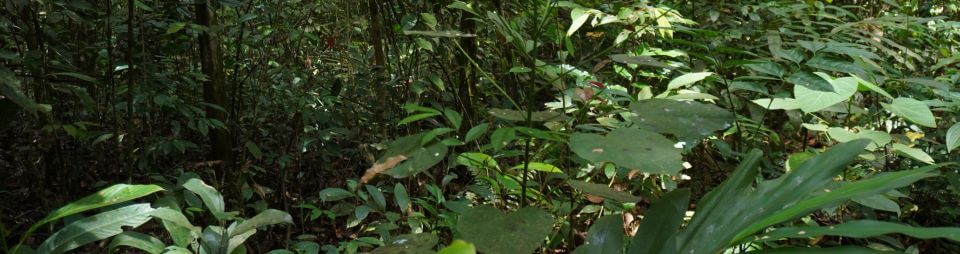
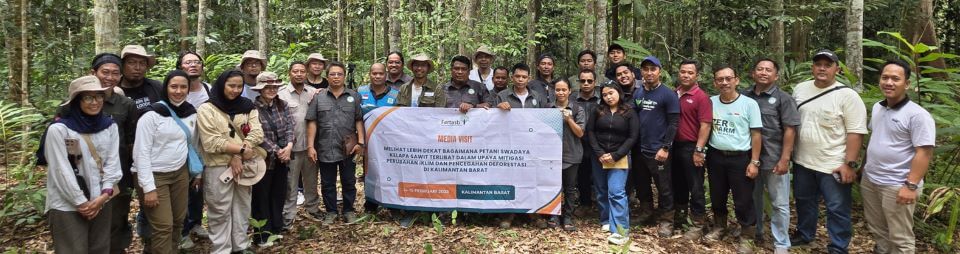
We explored two forbidden forest areas, spanning a total of 100 hectares. Inside, we encountered a diverse range of trees, some of which we had never heard of before. Over nearly four hours, we walked through these forests—one covering 80 hectares and the other 21 hectares.
In these forbidden forests, we found many towering trees, likely over 100 years old. The smallholders accompanying us identified them—some familiar, like ironwood (Eusideroxylon zwageri), agarwood (Aquilaria malaccensis), and durian trees (Durio zibethinus), while others were new to us, such as the Upas tree (Antiaris toxicaria). According to the smallholders, the Upas tree produces a deadly sap once used by the Dayak people for hunting.
We were amazed—despite the increasing appeal of palm oil cultivation, smallholders had successfully preserved these forests and their rare tree species.

Seedling Nurseries for Land Enrichment and Rehabilitation
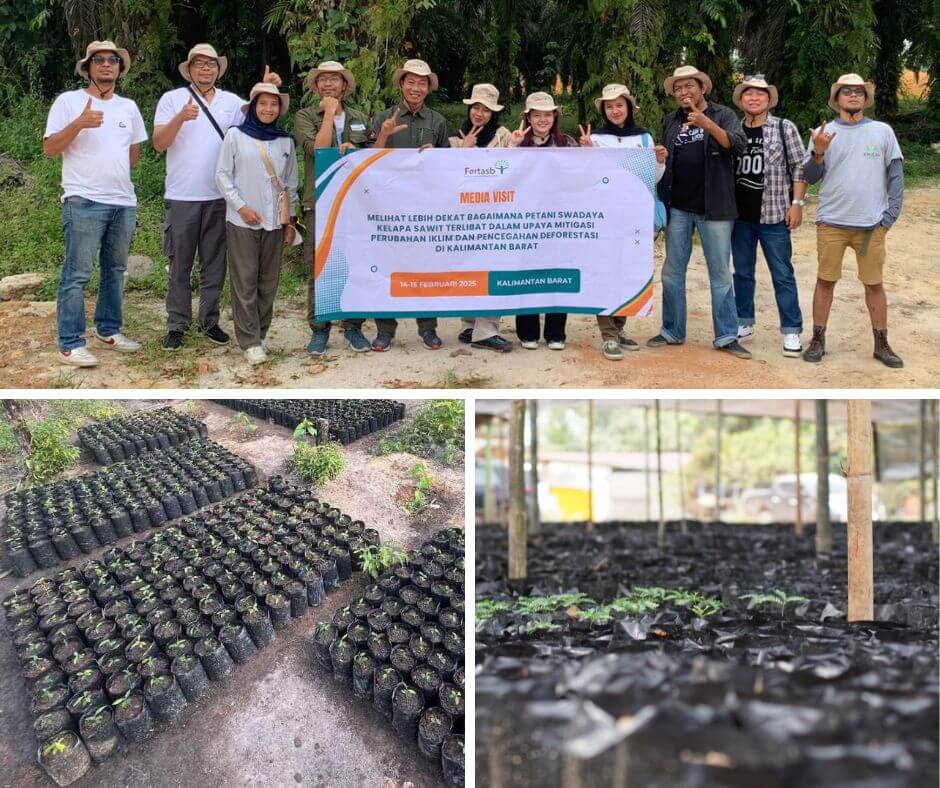
Beyond the forest visit, we had the opportunity to explore a nursery managed by PPMH, located next to their Secretariat. The nursery houses approximately 12,000 seedlings of various tree species, including sengon (Falcataria moluccana), teak (Tectona grandis), raintree (Samanea saman), agarwood (Aquilaria malaccensis), durian (Durio zibethinus), and mentawa (Pouteria obovata), which have been nurtured for the past two months.
These seedlings will soon be planted in the two forbidden forests and distributed to smallholders for planting in home gardens and along village roads. This initiative reflects PPMH’s commitment to enriching the forbidden forest areas and promoting reforestation in villages.
During discussions with PPMH’s management, we learned that this nursery is funded through RSPO credit sales and support from other stakeholders. PPMH is also engaging its corporate partners in further nursery development.
Forbidden Forests: Could They Become an Oasis Amidst Palm Oil Plantations?

According to Forestdigest.com, researchers from various universities conducted an experiment by establishing 52 micro-forests within palm oil plantations in Sumatra. Each micro-forest covered just 2.8 hectares. After five years, their findings were published in Nature on May 24, 2023.
The study revealed that the presence of micro-forests increased biodiversity by 1.5 times compared to palm oil plantations without them. Among 19 measured ecosystem functions, all showed higher values in plantations with micro-forests.
These micro-forests became biodiversity hotspots, attracting various species such as bacteria, insects, bats, and birds. Their presence transformed the harsh, biodiversity-poor environment of palm oil plantations into a more hospitable habitat for wildlife.
Beyond biodiversity, micro-forests also enhanced ecosystem functions. Palm oil plantations with micro-forests exhibited improved water cycles, nutrient circulation, and pollination processes compared to those without.
Interestingly, researchers found that trees within palm oil plantations did not compete for nutrients with palm oil plants. The productivity of surrounding palm oil crops remained unchanged before and after the micro-forests were introduced.
PPMH’s effort to conserve nearly 100 hectares of forest within a palm oil plantation landscape deserves broad support. These forests not only contribute to biodiversity but also serve as a powerful example of how smallholders can play a key role in forest conservation and climate change mitigation.
The Media Visit, held on February 14-15, 2025, coinciding with Valentine’s Day, was a meaningful journey—highlighting smallholders’ commitment to preserving their forests and promoting reforestation.

To further support PPMH’s forest conservation efforts, FORTASBI is inviting the public to contribute through donations via BenihBaik.com. Support now!

Newsletter January 2025
Download Now!946 Downloads
- (0251) 8365959
- admin@fortasbi.org
- Jl. Artzimar III No.13B, Kec. Bogor Utara, Kota Bogor, Jawa Barat 16152