
Newsletter; Maret 2026
THE GREEN COLUMN
A River Comes Back to Life
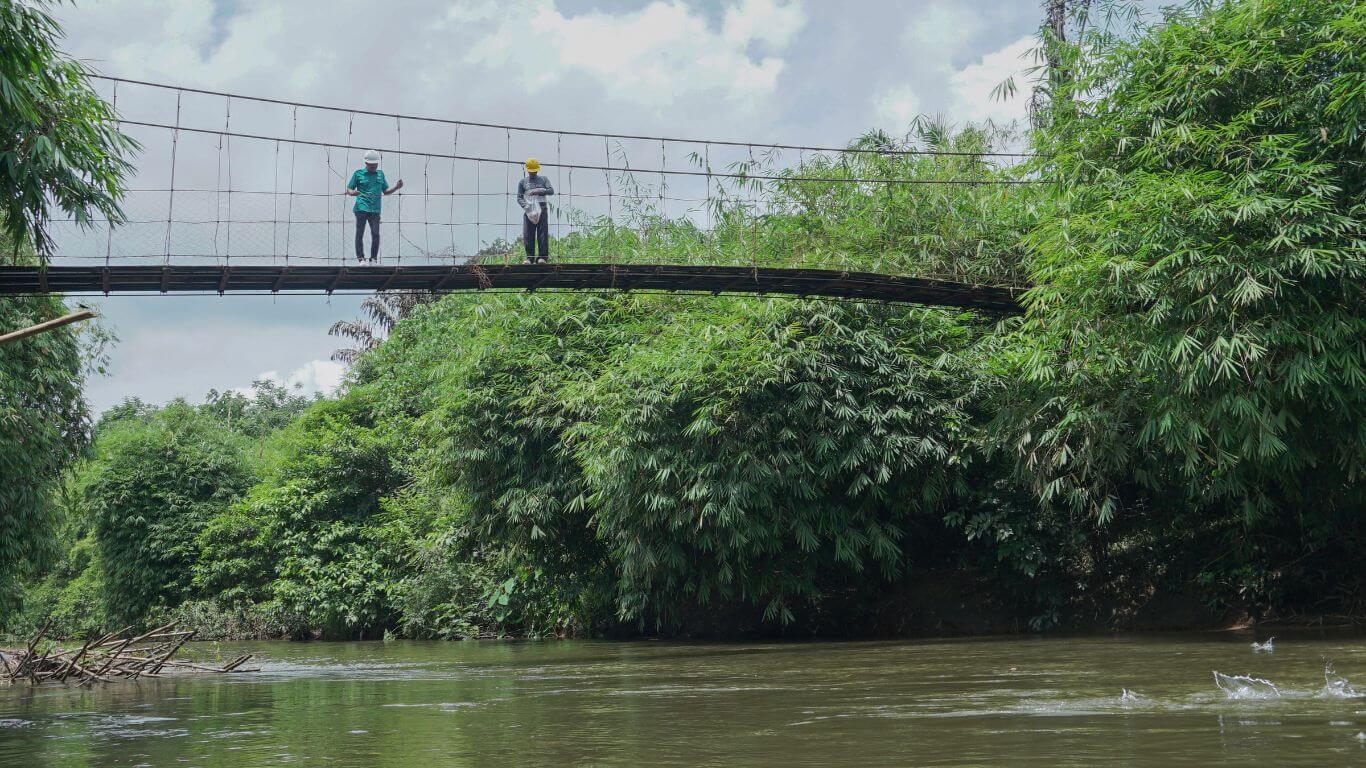
After three years protecting a sacred river pool in Jambi, smallholder harvest fish, hope, and lessons in sustainability.
That morning, the river in Lubuk Lawas Village felt different. A thin veil of mist still hovered above the water as villagers began gathering near the suspension bridge in RT 002. Some men arrived carrying fishing nets and plastic buckets on their shoulders. A few women spread woven mats beneath the trees and lit small cooking stoves.
From a distance, it looked almost like a village festival. But what the people of Lubuk Lawas were waiting for that morning was not a traditional celebration or an annual event. They had come to witness something far rarer: the reopening of a river they had carefully protected for three years.
On Wednesday, January 28, 2026, the stretch of river known locally as Lubuk Larangan was officially opened for fishing. Three years earlier, residents of Batang Asam District in Tanjung Jabung Barat Regency, Jambi, had made a decision that required patience and collective discipline. They agreed to close nearly one kilometer of the river to all fishing activities.
No hooks!
No nets!
No one is allowed to take fish from the water!
For villagers who had lived alongside the river for generations, the decision was not easy. The river is more than just a natural landscape. It provides food, a place where children play, and a social space where the community gathers. Yet the people of Lubuk Lawas believed in a simple principle: if nature is given time to heal, it will eventually return the gift of life.
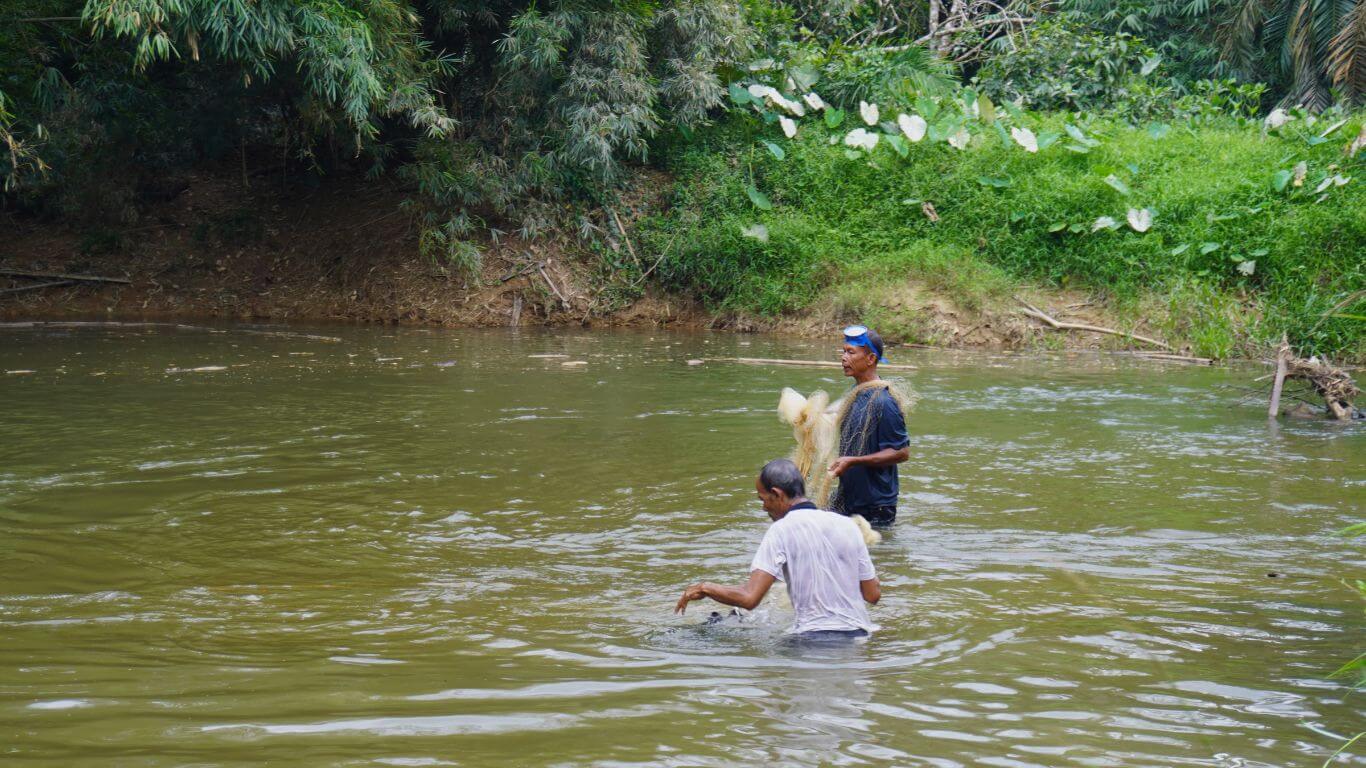
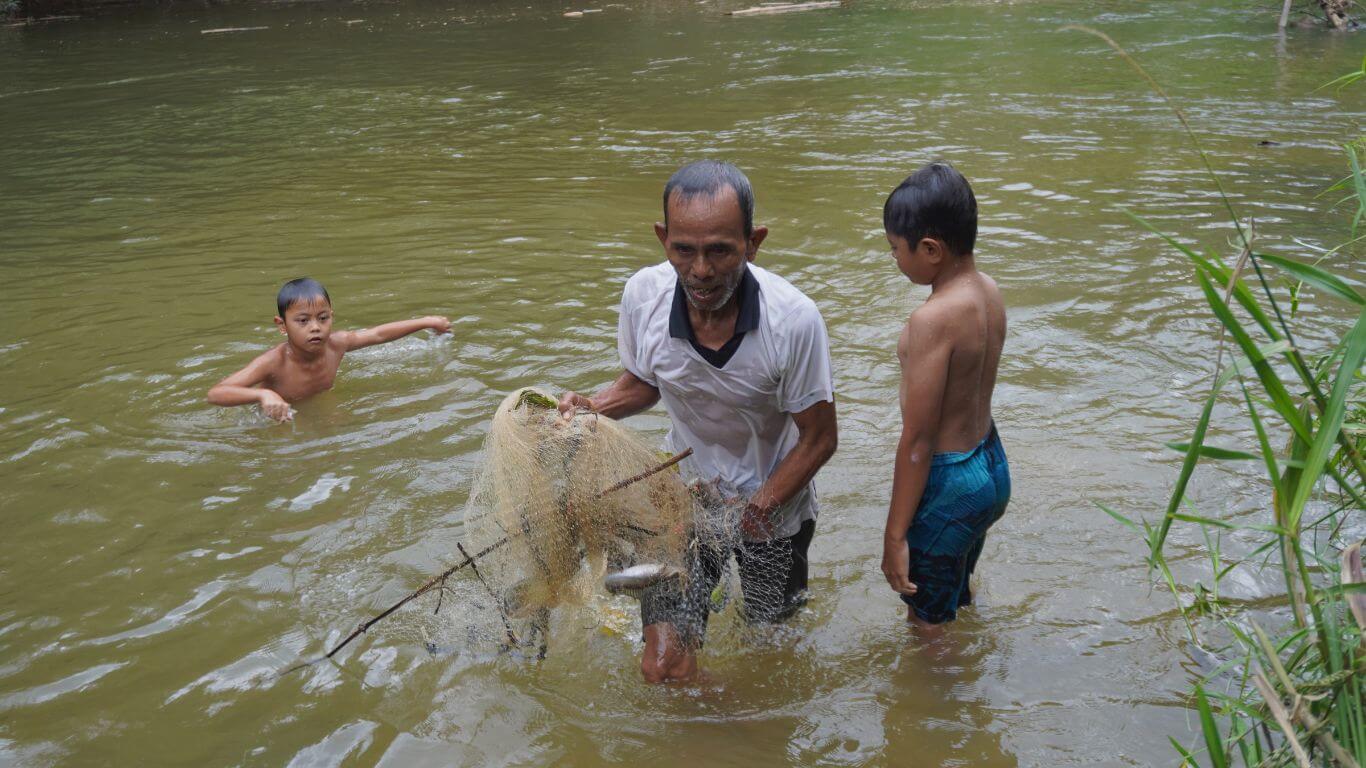
That morning, their belief was finally put to the test. As the signal was given, several community elders stepped into the water first. They carried fishing nets and cast them into the river, whose surface shimmered under the soft light of the morning sun.
Within seconds, ripples spread across the water. When the nets were pulled up, dozens of large fish thrashed inside.
Cheers erupted along the riverbank. Villagers rushed closer, their faces bright with excitement. After three years of restraint, the river had responded to their patience.
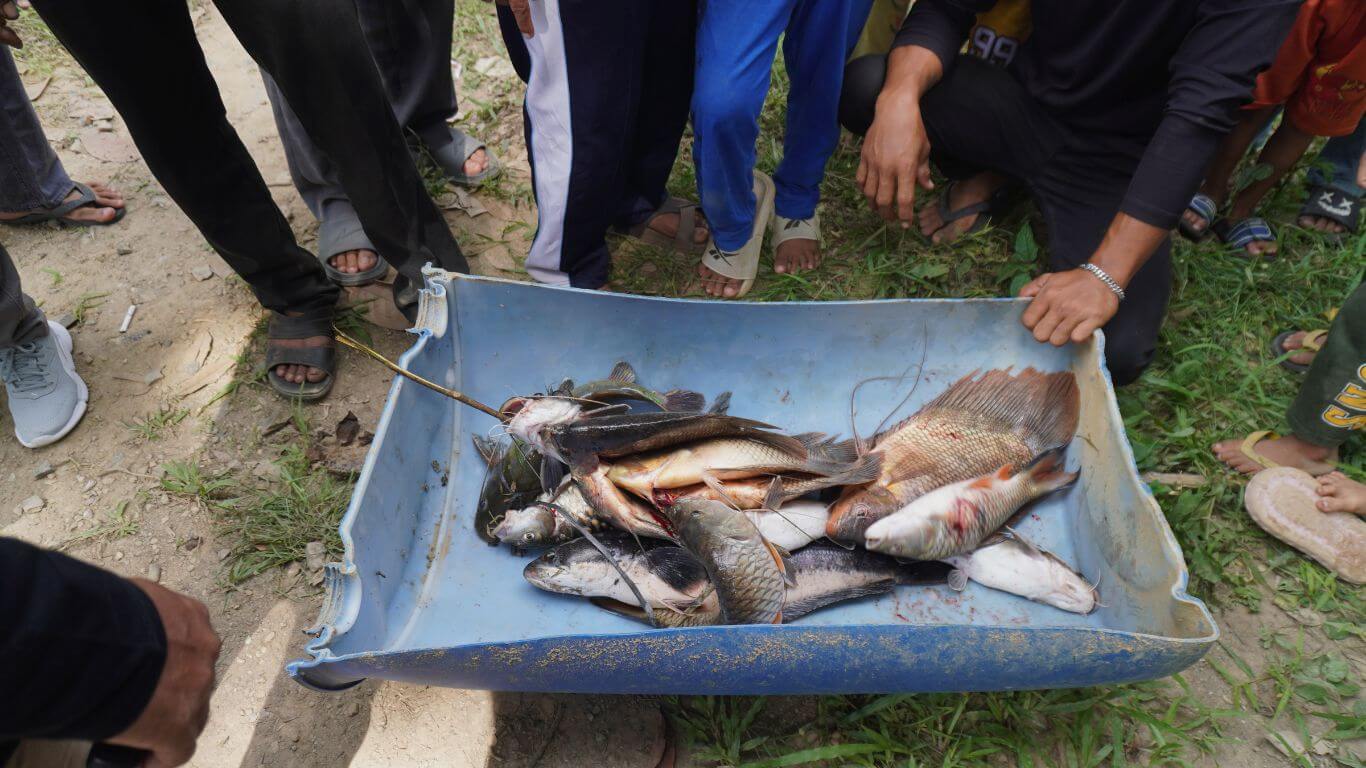
The nets were filled with freshwater species: catfish, tilapia, baung, hampala, gourami, and berau. Yet one fish in particular made many villagers pause in disbelief. The semah fish, the species had not been seen in the village river for years. Some residents had quietly assumed it had disappeared entirely from their waters. Now it had returned.
One villager lifted the fish from the net and held it up for everyone on the riverbank to see. The joy on his face was unmistakable. For the people of Lubuk Lawas, the reappearance of the semah meant far more than a successful catch. It was proof that their river had truly recovered.
Soon, the atmosphere along the riverbank shifted. What had begun as a moment of anticipation turned into a lively communal gathering. Freshly caught fish were cleaned and placed over glowing charcoal. Thin trails of smoke rose slowly into the morning air, carrying the unmistakable aroma of grilled fish.
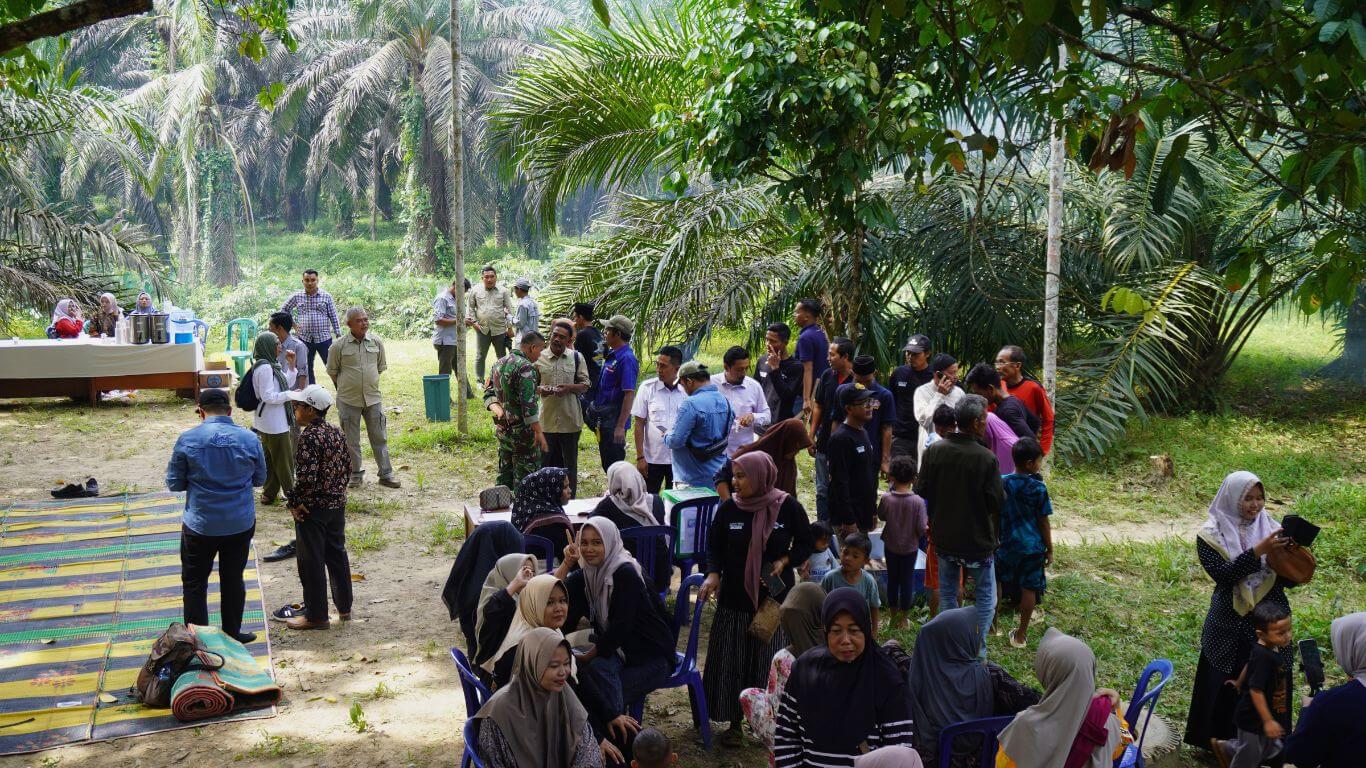
Villagers sat together on mats spread beneath the trees, sharing a simple meal. The main dish, of course, came from the river where they had protected themselves.
That morning, Lubuk Larangan was more than a fish harvest. It was a celebration of patience.
The practice of Lubuk Larangan has long been known in many parts of Sumatera. Under this tradition, communities collectively agree to close certain sections of a river for a period of time to allow fish populations and ecosystems to recover naturally. Anyone who violates the agreement during the closure period faces social or customary sanctions.
The idea is rooted in local wisdom passed down through generations. When rivers are exploited continuously without pause, fish stocks decline. But when nature is given time, it often has an extraordinary ability to restore itself. In Lubuk Lawas, the tradition was revived around three years ago. The initiative began with members of the village youth organization, Karang Taruna, who had noticed that fish were becoming increasingly scarce in the river. They approached village leaders and residents and proposed a collective agreement to protect a stretch of the waterway.
Smallholders in the village soon joined the effort. Among them was the Berkah Mandah Lestari Smallholder Association, a smallholder organization that has obtained sustainability certification from the Roundtable on Sustainable Palm Oil (RSPO). The initiative also received support from Fortasbi Indonesia and Setara Jambi, organizations that work closely with smallholders to strengthen sustainable smallholder practices. For those involved in the program, Lubuk Larangan became an example of how environmental conservation can grow alongside efforts to strengthen rural livelihoods.
In 2023, the protected river area in Lubuk Lawas was even visited by several sustainable palm oil buyers who are members of the RSPO through the Meet and Green program. The international guests came to see firsthand how sustainability practices can emerge from grassroots initiatives within rural communities. Yet for the villagers themselves, the success of Lubuk Larangan is not measured by visits from outsiders. Its success is far simpler. Fish have returned to their river. Even so, the reopening of Lubuk Larangan is carefully managed. The community has established rules to ensure that harvesting the fish does not disrupt the ecological balance that has slowly recovered.
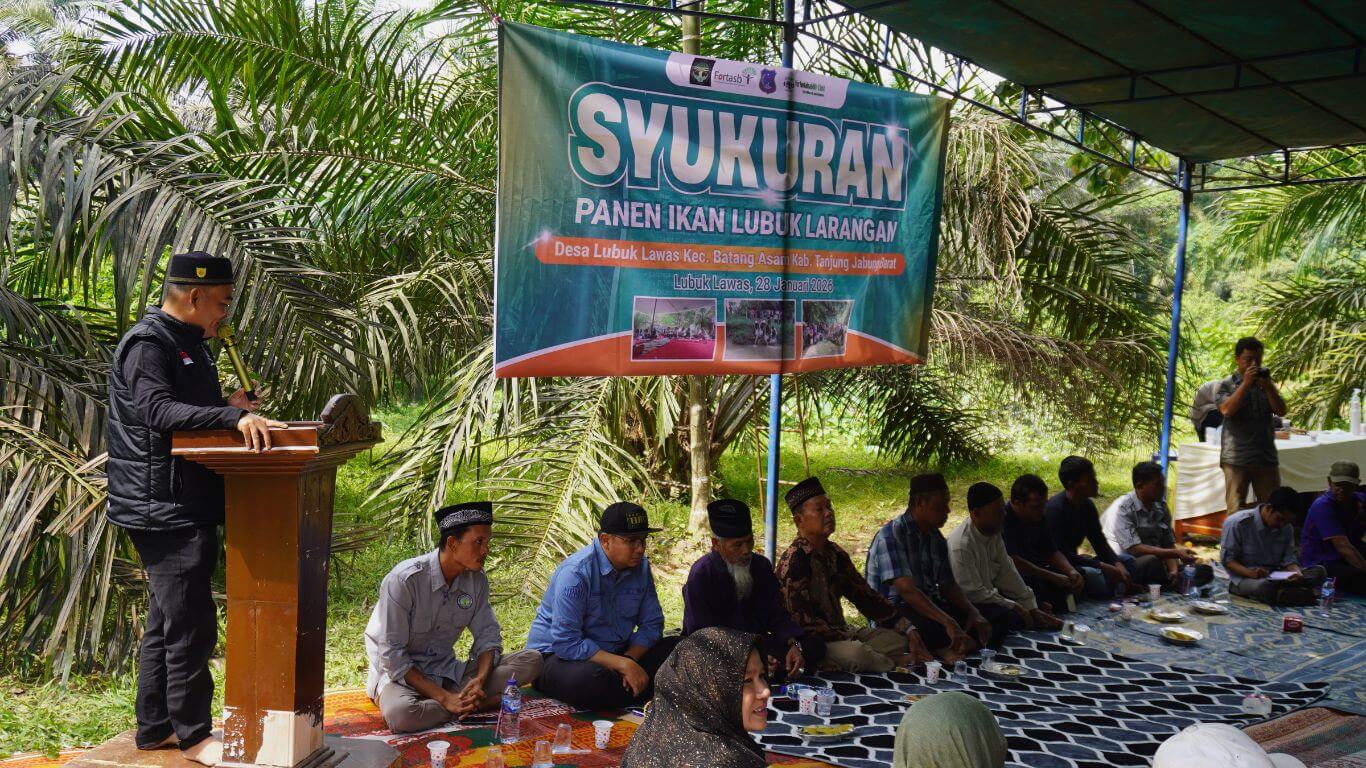
On the first day of the reopening, only selected community elders and designated villagers are allowed to enter the river. The fish they catch are cooked and shared in a communal meal for the entire village.
On the second day, different rules apply. Only certain groups are allowed to fish, and the catch is not taken home. Instead, the fish are collected and sold, with the proceeds used for community needs, including the construction of the village mosque. Only on the third day are all villagers allowed to enter the river and catch fish for their families.
The harvest continues for about a week. After that, the river is closed again and the fishing ban returns. The villagers have not yet decided how long the next closure will last, but many expect the tradition will continue for several more years. This is how the people of Lubuk Lawas maintain a delicate balance between using natural resources and allowing nature the time it needs to recover.
Amid global debates about sustainability, stories like this often go unnoticed. Conversations about the future of palm oil frequently take place in international conference rooms, within technical reports, or through complex certification systems. But in this small village, sustainability carries a much simpler meaning. It exists in the form of a clean river. In fish returning to the water. In a shared agreement not to take everything at once.
The smallholders in Lubuk Lawas do not speak only about farm productivity or international certification standards. They also talk about the river that provides water, the fish that provide food, and the environment that sustains everyday life. Three years of protecting Lubuk Larangan have taught them a simple lesson that is often forgotten in larger conversations about development and sustainability: when nature is given time to recover, it almost always finds a way to live again. And in a small village in Jambi, that lesson took the form of fish swimming once more through their river. The river, at last, has come back to life.
Lubuk Larangan shows how local wisdom can naturally align with global sustainability principles. Conservation practices rooted in village traditions often reflect the same ecological values promoted by international sustainability frameworks.
For the people of Lubuk Lawas, protecting the river is not simply an environmental activity. It is a way of protecting their future.
As the afternoon light begins to fade, the riverbank slowly returns to its usual quiet. Children continue playing in the shallow water, while some villagers head home carrying the fish they caught earlier. The river flows gently beneath the suspension bridge. To outsiders, it may look like any other village river. But to the people of Lubuk Lawas, it now feels different.
- (0251) 8365959
- admin@fortasbi.org
- Jl. Artzimar III No.13B, Kec. Bogor Utara, Kota Bogor, Jawa Barat 16152