Newsletter; July 2025
THE GREEN COLUMN
Sustainability Next: FORTASBI Facilitates Training on How to Measure Carbon in Palm Oil Smallholders' Plantations
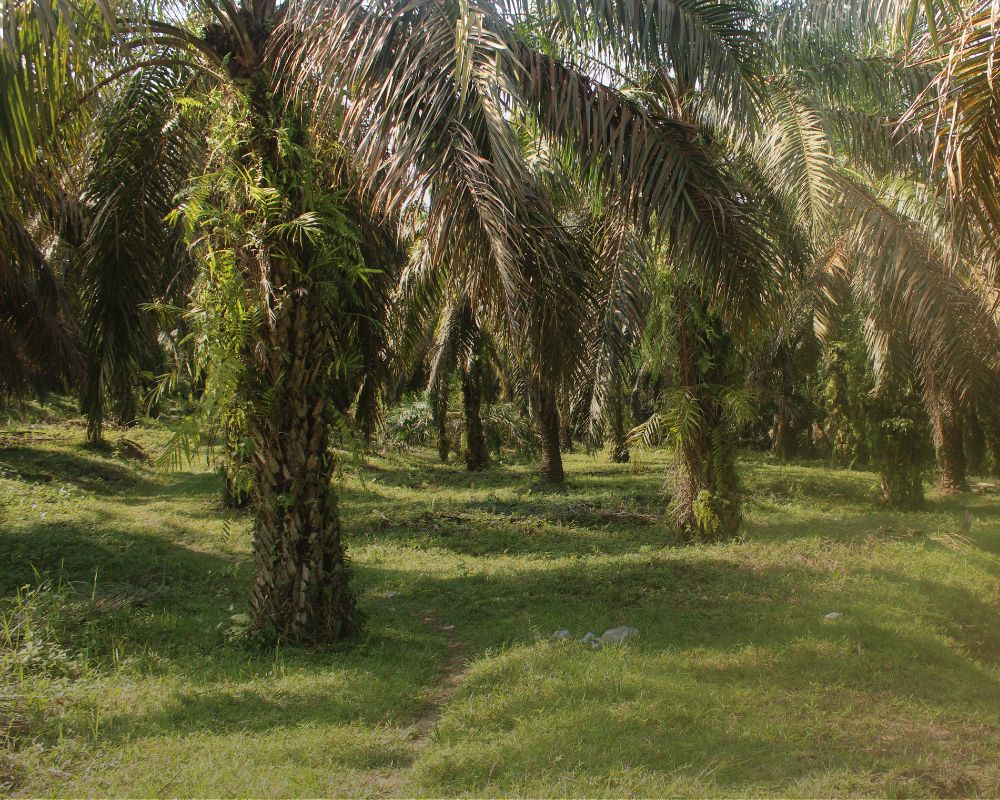
Palm oil plantations are frequently in the spotlight in environmental discussions, particularly those related to greenhouse gas or carbon emissions. A common concern is that palm oil plantations contribute to climate change, especially when land clearing involves deforestation, including peatlands or forest areas.
Palm oil smallholders, especially those certified undersustainability schemes such as RSPO (Roundtable on Sustainable Palm Oil) or ISPO (Indonesian Sustainable Palm Oil), are encouraged to implement best practices that reduce environmental impact, including carbon emissions.
Certified RSPO or ISPO smallholders play a role in climate change mitigation efforts by helping reduce the release of carbon and other substances into the atmosphere.
Several good agricultural practices have already been adopted and are currently being implemented as part of sustainable farming. These include the use of organic fertilizers, the management of biomass waste such as fronds and empty fruit bunches for compost or mulch, peatland management to prevent drought and fires, intercropping within plantation plots, and the use of biological pest control.
At present, the major challenge for smallholders in reducing carbon emissions from plantation activities lies in their access to knowledge, technology, and financing needed to adopt these sustainable practices.
Many smallholders still face limitations in understanding carbon emissions and how to reduce them effectively. However, they continue to strive to improve their knowledge.

The Forum Petani Kelapa Sawit Berkelanjutan Indonesia, or FORTASBI, as an organization that represents certified sustainable palm oil smallholders, believes it is time for smallholders to gain a clear understanding of their contribution to carbon emission reduction through good and sustainable palm oil plantation practices.
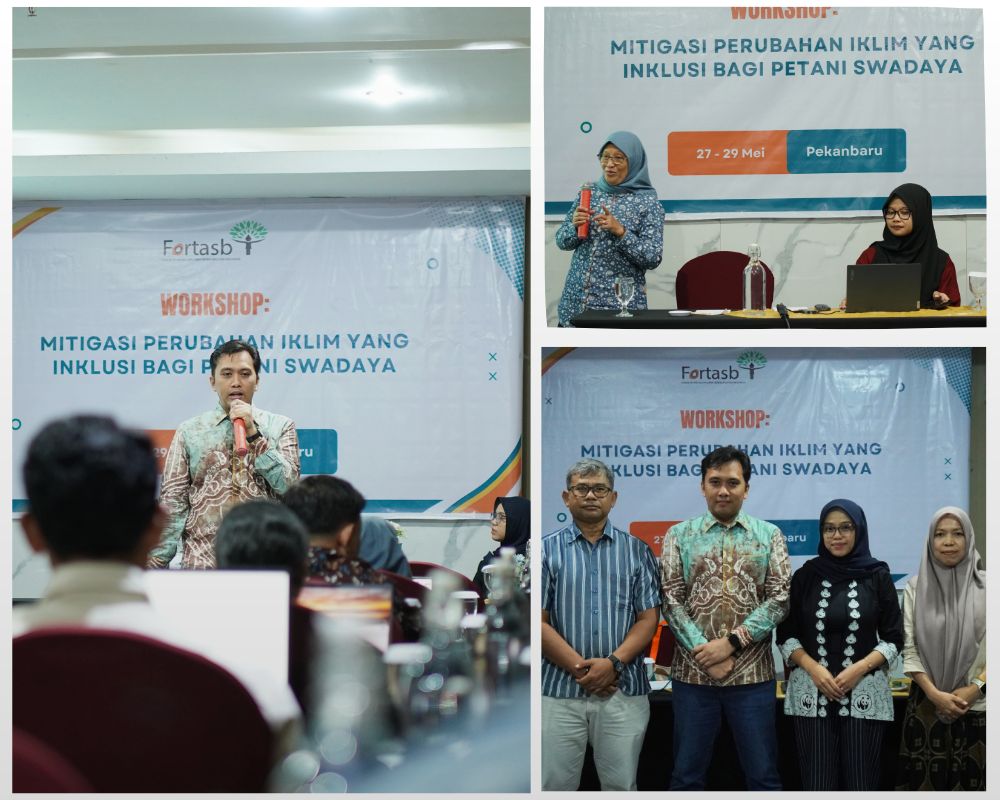
From 27 to 29 May 2025, FORTASBI organized a Workshop on Inclusive Climate Change Mitigation for Palm Oil Smallholders and a Training of Trainers on How to Measure Carbon Stock in Smallholders’ Palm Oil Plantations. These events were held in Pekanbaru, Riau.
The workshop and training featured speakers from WWF Indonesia and TUV Rheinland, as well as trainers from CIFOR ICRAF. A total of 26 palm oil smallholders attended the events. FORTASBI selected three smallholders from each of its member provinces to participate.
The workshop provided a broad overview and general knowledge on climate change and its connection to carbon in smallholders’ palm oil plantations. The one-day workshop was designed to help smallholders gain a clearer understanding of climate change.
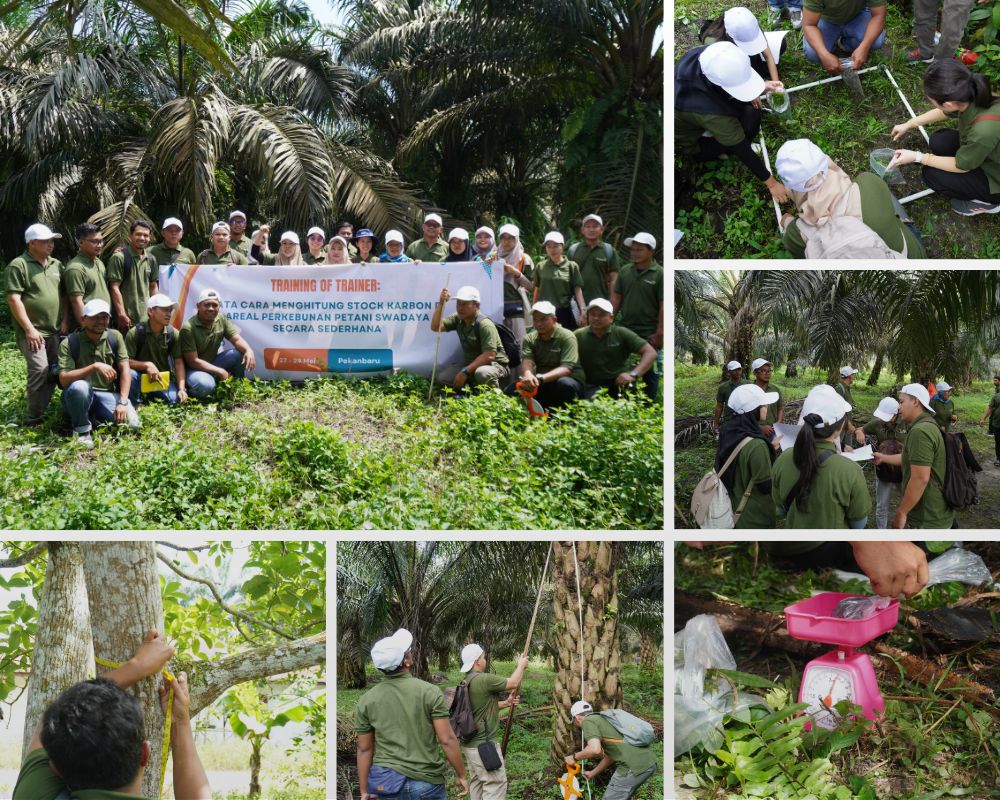
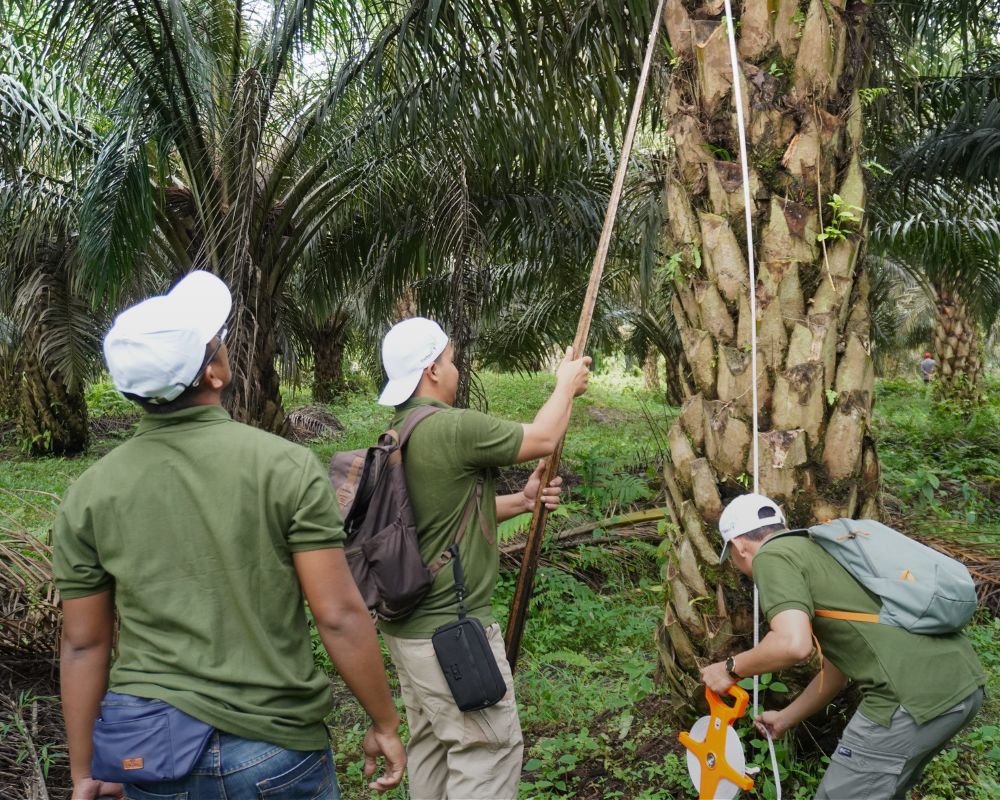
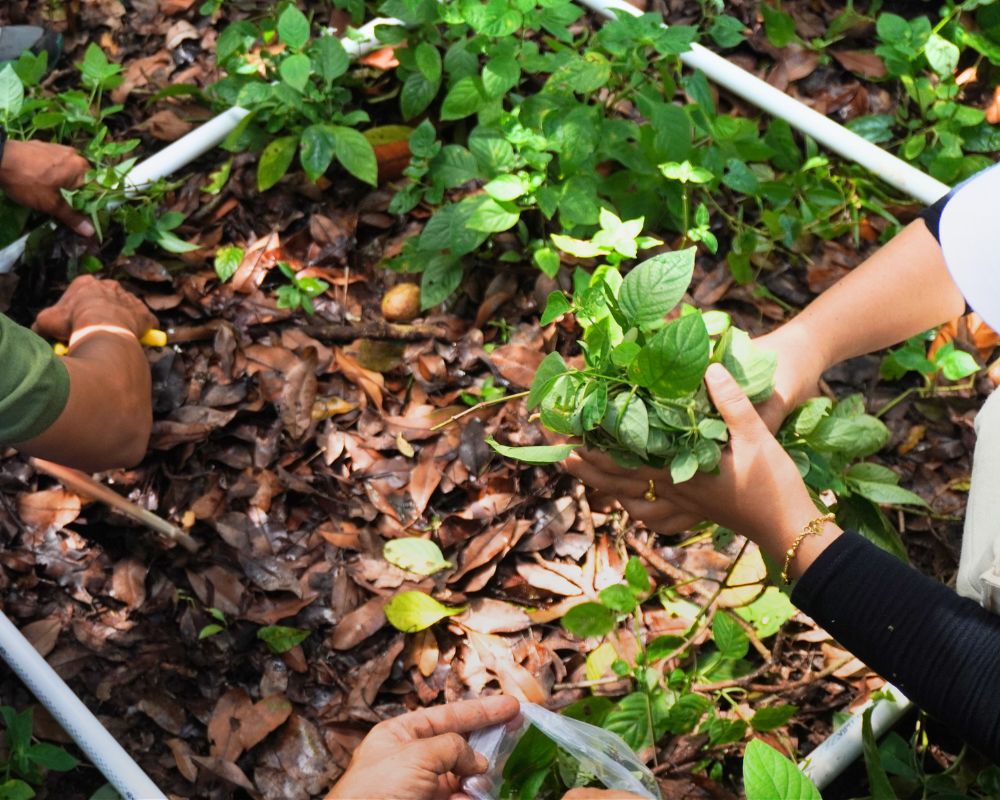
Following the workshop, FORTASBI, together with trainers from CIFOR ICRAF, invited participants to conduct field practice in palm oil and agroforestry plots. The goal was to help smallholders measure carbon sequestration in both monoculture and mixed palm oil plantations using simple methods.
The practical sessions allowed smallholders to better understand where carbon is stored, how it is released, and how to collect samples and calculate carbon stock using tools commonly available to them.
All workshop and training participants are now responsible for conducting similar training sessions with other smallholders in their regions. This is part of FORTASBI’s strategy to reach more farmers and support the wider adoption of simple carbon measurement practices.
Smallholders Train Smallholders in Their Own Region
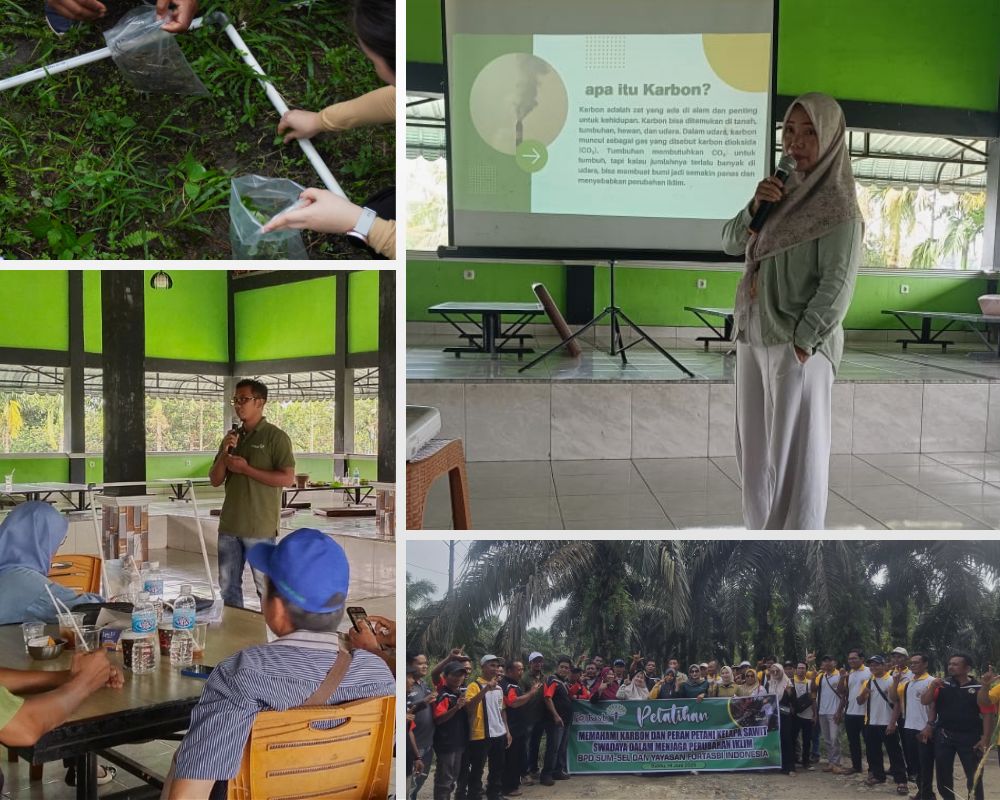
After participating in the Workshop on Inclusive Climate Change Mitigation for Palm Oil Smallholders and the Training of Trainers on How to Measure Carbon Stock in Smallholders’ Palm Oil Plantations in Pekanbaru, Riau, on 27 to 29 May 2025, smallholders returned to their respective regions and immediately began applying and sharing what they had learned.
From June to July 2025, local trainers have started training sessions for other smallholders. This training will continue until August 2025, with a target of 300 smallholders receiving training on how to measure carbon in palm oil plantations.
The training by local trainers started in South Sumatra, where three local trainers, Mrs. Mutingah, Mrs. Harmini, and Mr. Bayu Nurohim, shared both knowledge and practical field experience with a total of 51 palm oil smallholders from KUD PEMURA, KUD Karya Mulya, and KUD Sumber Rejeki. The training was conducted on 14 June 2025.
In addition to Musi Rawas Utara, local trainers in North Sumatra, Mr. Jumadi and Mr. Anam, trained 50 smallholders in Pangkatan Subdistrict on 16 June 2025. The participants came from Koperasi Konsumen Tebing Tinggi Pangkatan Sejahtera, North Sumatra.
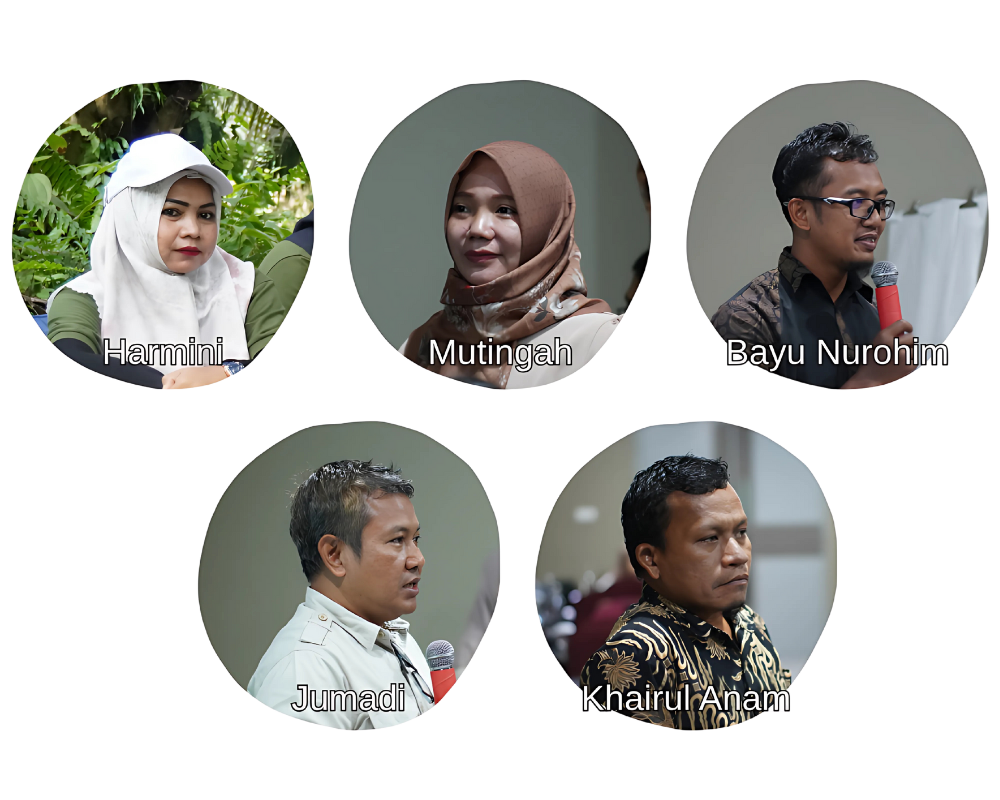

Trainer Mutingah emphasized that the carbon training for FORTASBI smallholders is not only about meeting certification standards. It also offers opportunities to improve productivity, efficiency, and the environmental or economic value of carbon as an ecosystem service.
This carbon training is a response to global climate issues that require serious attention. It helps smallholders understand how to reduce emissions effectively.
According to the trainers, this initiative reflects the care and real contribution of palm oil smallholders to climate action. Climate change mitigation and carbon measurement practices will continue to be expanded in more regions with the support of FORTASBI and the local trainers who have already been trained.
Through this training, FORTASBI reaffirms its commitment to empowering its members not only to produce palm oil productively but also to do so responsibly with care for the environment.
- (0251) 8365959
- admin@fortasbi.org
- Jl. Artzimar III No.13B, Kec. Bogor Utara, Kota Bogor, Jawa Barat 16152