
Newsletter; Maret 2026
THE GREEN COLUMN
FORTASBI and the Effort to Guide Smallholders Toward Low-Emission Palm Oil Production
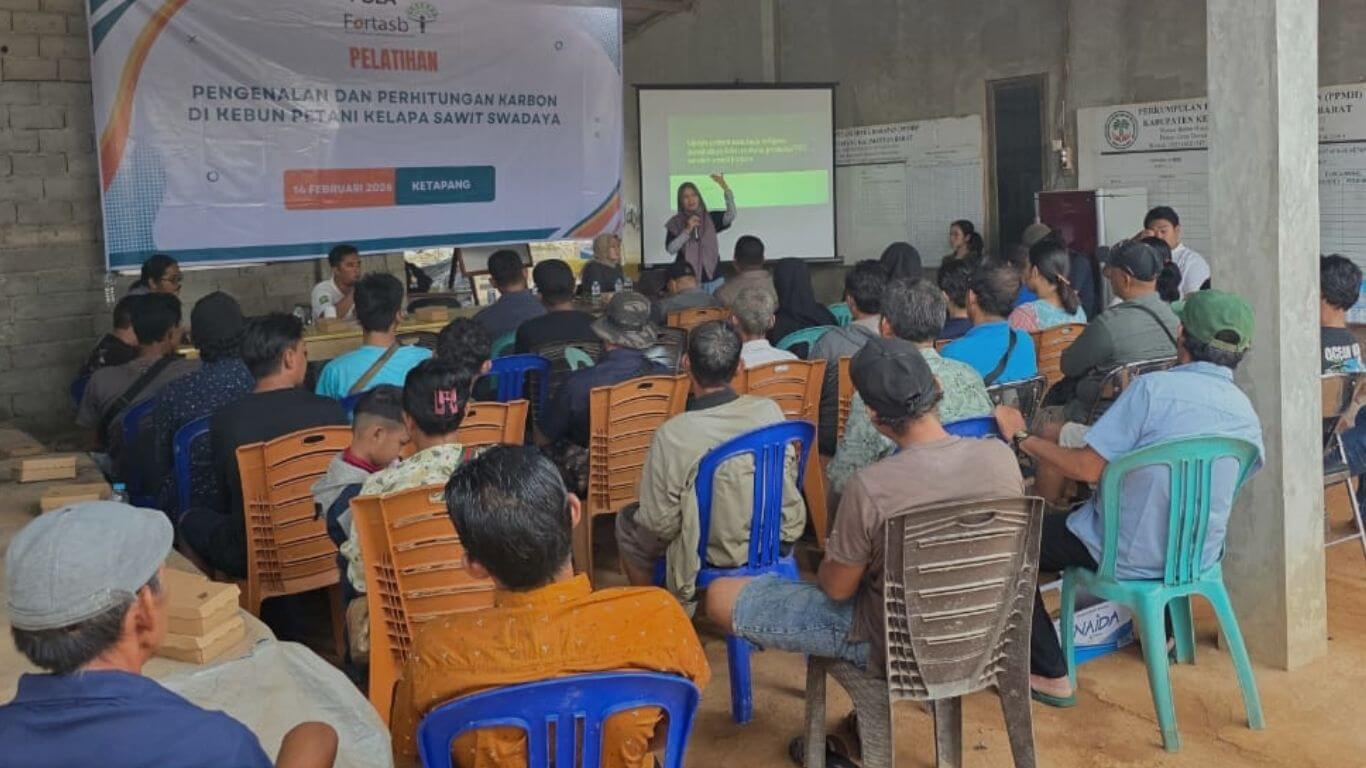
Regenerative agriculture is opening a pathway for smallholders to contribute to the production of fresh fruit bunches with lower emissions.
Morning in Air Upas, a subdistrict in Ketapang Regency, West Kalimantan, usually begins with familiar conversations: the weather, fertilizer supplies, or the latest price of fresh fruit bunches. But on Saturday, February 14, 2026, the atmosphere felt different. Inside a modest meeting room, around 120 smallholders sat in small groups, their faces serious and attentive. Some scribbled notes in their notebooks, while others listened carefully as a facilitator began introducing a topic that is increasingly appearing in discussions about the future of plantations: Carbon.
The training was organized by the Secretariat of the Indonesian Sustainable Palm Oil Farmers Forum, widely known as FORTASBI, as part of an effort to strengthen the capacity of smallholders so they are better prepared for the major changes unfolding in the global plantation sector. The sessions were held in two locations: the PPSK office in Air Upas and the PPMH office in Manis Mata, both in Ketapang Regency.
Since last year, FORTASBI has been actively introducing farming approaches that are more environmentally friendly and lower in carbon emissions. The initiative is part of a broader effort to encourage smallholders to begin adopting practices that support the production of fresh fruit bunches with lower emissions.
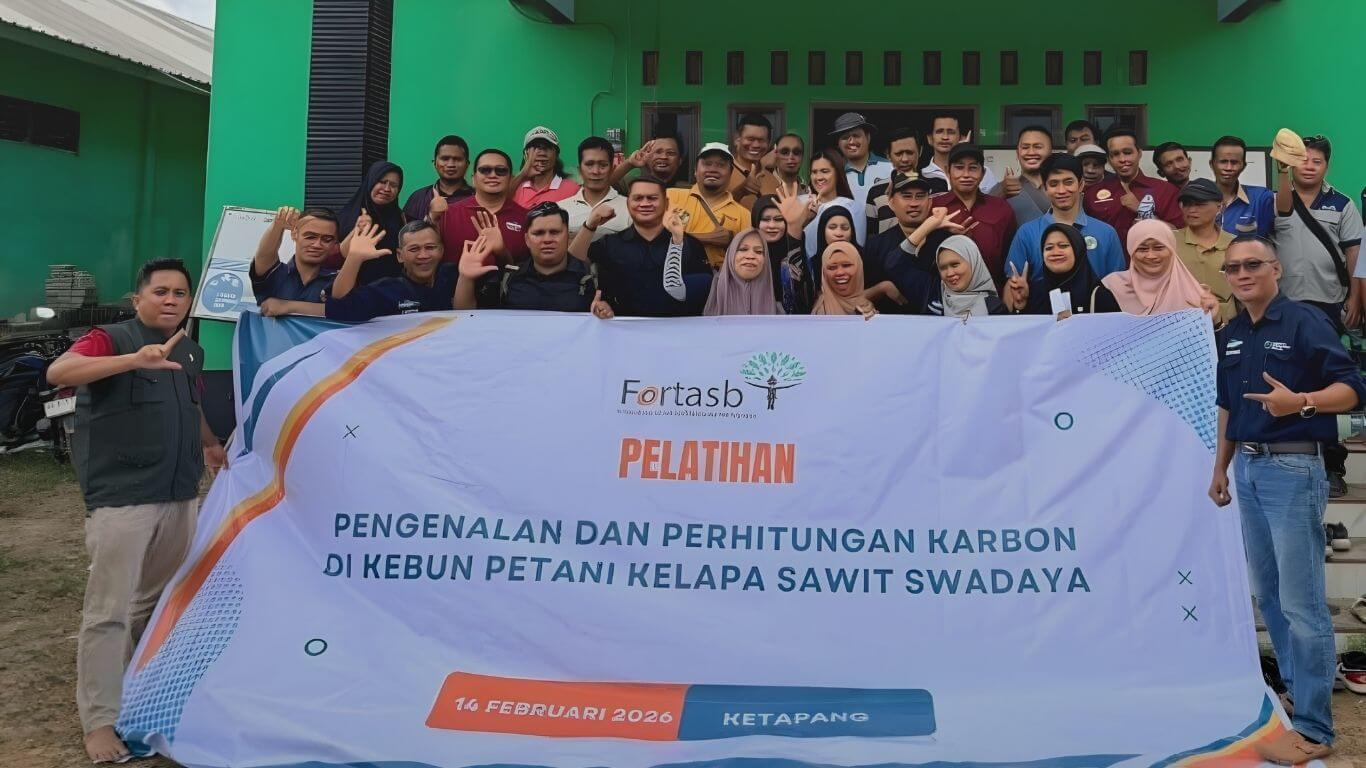
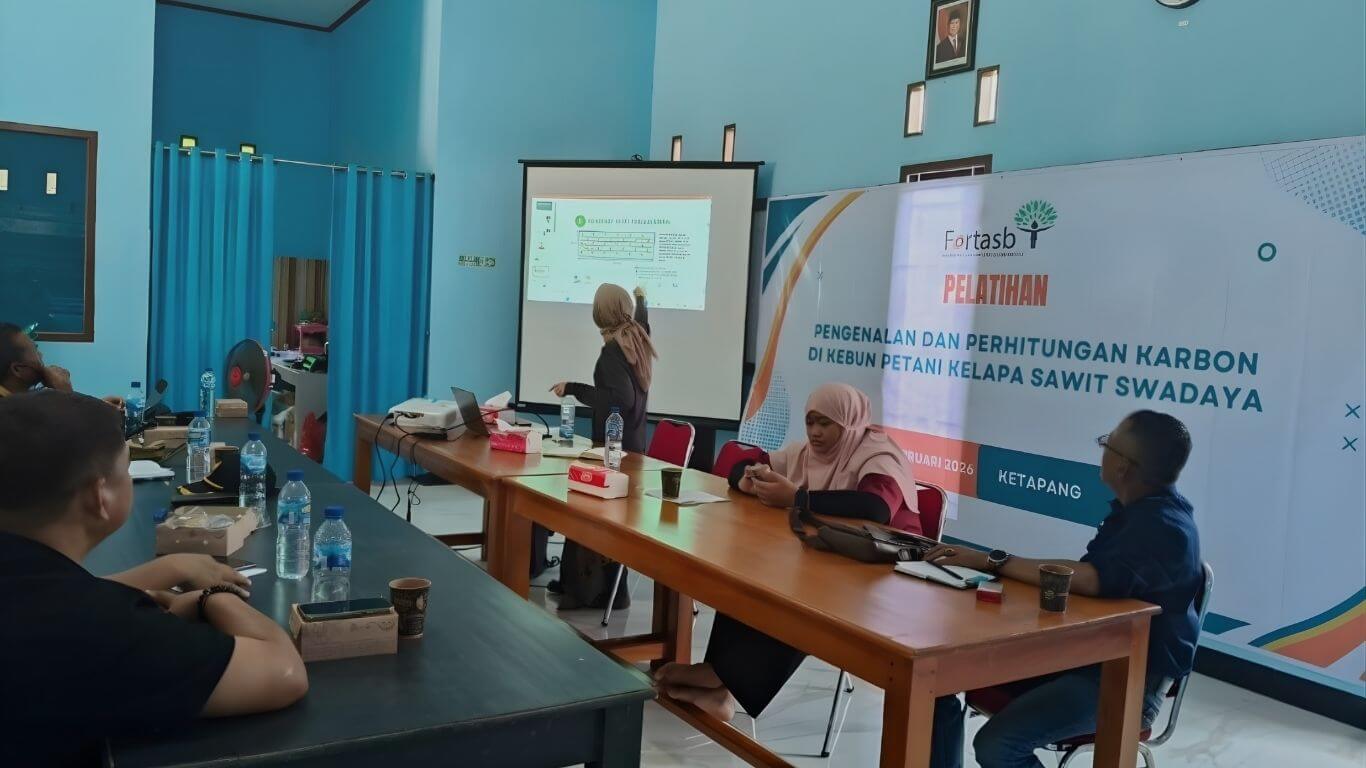
In 2026, the training program was carried out in two areas of West Kalimantan: Air Upas and Manis Mata. Around 120 smallholder farmers participated in the sessions. The participants were divided into two groups, facilitated by local farmer organizations, known as the PPSK class and the PPMH class.
The program continues an initiative first launched the previous year. For FORTASBI, strengthening human capacity among farmers is a critical step to ensure that smallholders are not left behind in the global conversation on sustainability. For many farmers living in rural areas, discussions about climate change have often felt distant from the realities of daily life in their villages.
During the training, farmers were introduced to several key topics related to more sustainable plantation management. The materials covered the relationship between oil palm plantations and climate change, as well as the concept of regenerative agriculture as a model for low-emission farming. For some farmers, the term regenerative agriculture may still sound unfamiliar. Yet many of the practices it promotes are not entirely new. In fact, several have long existed in traditional forms of plantation management.
Regenerative agriculture emphasizes maintaining ecological balance and protecting biodiversity within plantation landscapes. In practice, this approach can take many forms. Farmers may use organic fertilizers to maintain soil fertility, plant certain species that naturally control pests, or rely on barn owls to help manage rat populations in the plantations.
Another common practice involves stacking pruned palm fronds around the base of the trees. As the fronds decompose, they return organic nutrients to the soil. Some farmers also enrich their plantation areas by introducing additional plant species, helping support biodiversity within the plantation ecosystem.
This approach reframes oil palm plantations not simply as production sites, but as ecological spaces where balance and sustainability must be carefully maintained. For FORTASBI, regenerative agriculture represents an important model of low-carbon farming that smallholders should begin to adopt. By implementing such practices, farmers can contribute to efforts to produce palm oil with lower emissions.
In several regions across Indonesia, a number of farmer cooperatives and associations have already begun experimenting with these approaches in managing their plantations. In North Sumatra, for instance, KPUD Lestari and Koperasi Gaharu 100 have started developing plantation practices focused on sustaining healthy ecosystems. In Jambi, similar approaches are being implemented by the Asosiasi Petani Berkah Mandah Lestari and FPS MRM. Meanwhile, in Central Kalimantan, KUD Tani Subur is among the farmer groups that have begun applying the same model. These experiences show that environmentally responsible farming practices can begin at the farmer level.
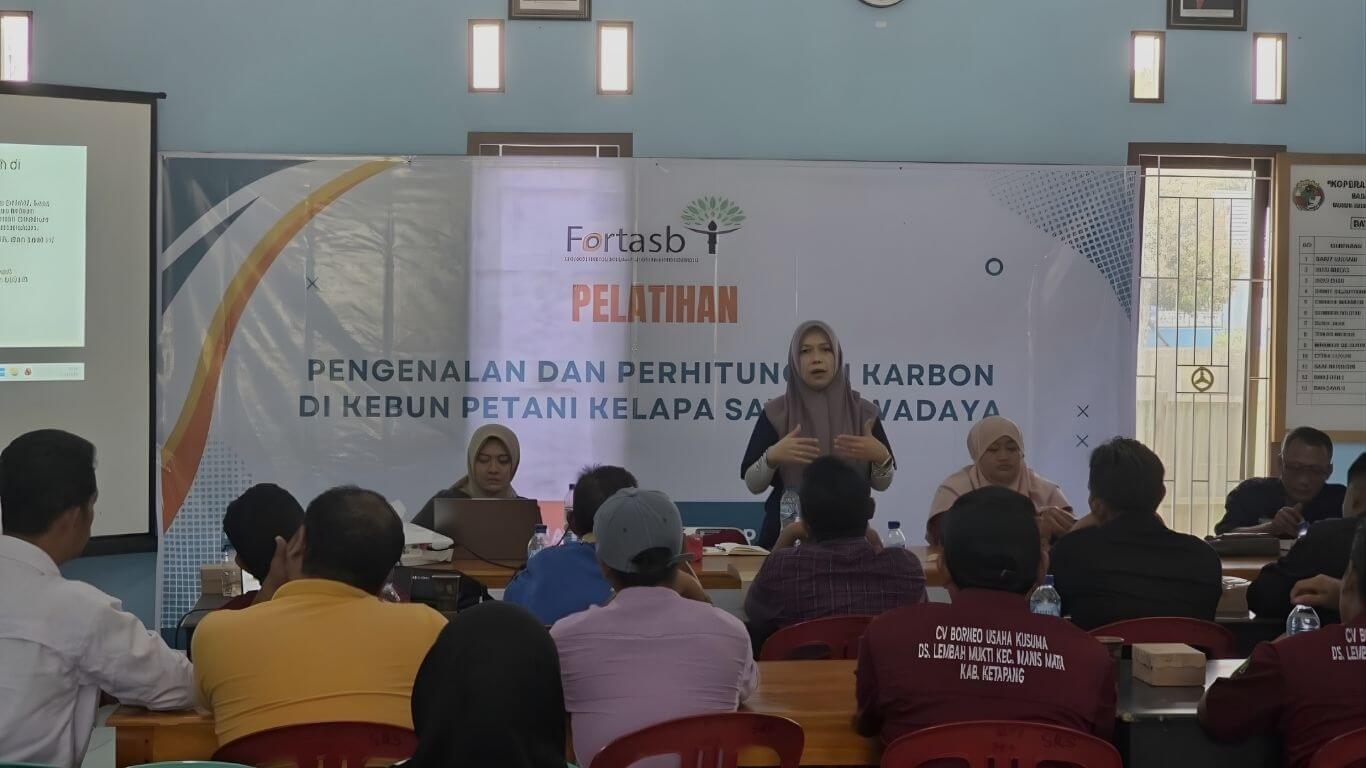
The training organized by FORTASBI in Air Upas and Manis Mata is part of a broader effort to expand this understanding among more smallholder farmers. By gaining a clearer picture of the relationship between plantation management and carbon emissions, farmers are encouraged to view their plantations from a broader perspective. An oil palm plantation is not only a place where fresh fruit bunches are harvested.
It is also part of a larger living environment that requires thoughtful and responsible management. Through initiatives like this, FORTASBI hopes that more smallholder farmers will begin adopting regenerative agricultural practices in managing their plantations. Small steps taken at the farmer level, after all, can become an important part of the broader effort to move toward palm oil production that is more environmentally responsible and lower in emissions.
Across smallholder plantations in many parts of Indonesia, this shift in perspective is slowly beginning to take root. From the way farmers care for their soil to the way they maintain ecological balance within their plantations, many are starting to see that the future of palm oil production will not be defined by harvest yields alone, but also by how the land itself is managed and sustained for the long term.
Newsletter January 2025
Download Now!176 Downloads
- (0251) 8365959
- admin@fortasbi.org
- Jl. Artzimar III No.13B, Kec. Bogor Utara, Kota Bogor, Jawa Barat 16152