Newsletter; Maret 2026
THE GREEN COLUMN
Ramadan Blessings from Smallholder
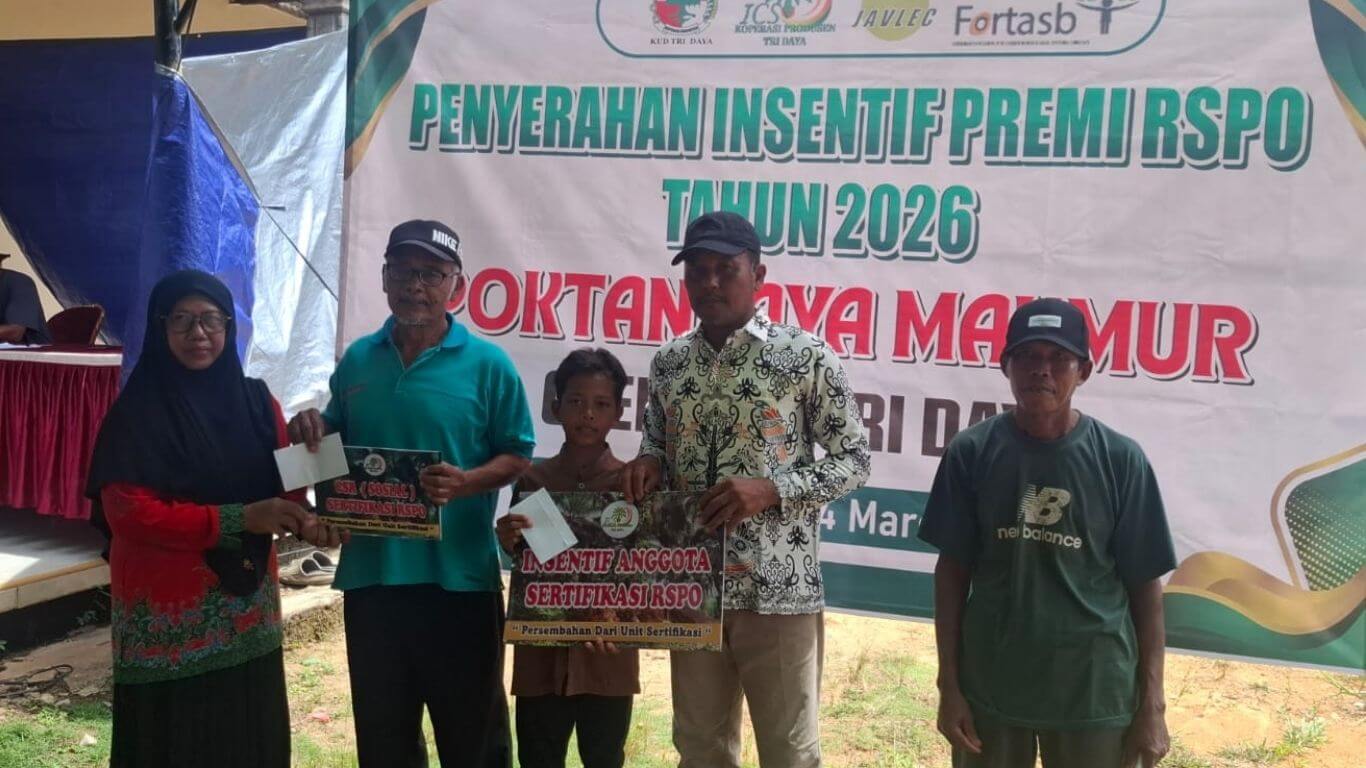
When smallholders share the blessings of Ramadan and prove that sustainability is also about social solidarity.
As sunset approaches in a small village in Kotawaringin Timur, Central Kalimantan, the yard of a modest house slowly turns into a gathering place. Several villagers sit on plastic chairs arranged in neat rows. On a wooden table covered with a white cloth, dozens of Eid gift packages are carefully stacked. One by one, a cooperative officer calls the names of residents who have come to collect them. Each person steps forward quietly, receives a package, and leaves with a smile and a soft word of thanks. Inside the parcels are simple necessities: rice, eggs, instant noodles, cookies, beverages, and prayer supplies.
For some people, the contents might appear modest. But for smallholder families in the village, these packages represent a long-standing tradition of sharing that many look forward to every year during Ramadan and Eid al-Fitr.

What makes this story remarkable is where the packages come from. They are not part of a charity program run by a large corporation or a government agency. Instead, they are provided by the smallholder themselves.
Across several palm-growing villages in Indonesia, smallholder groups that have begun implementing sustainable smallholder practices are developing an initiative known as Smallholder Social Responsibility, or SSR. Through this program, smallholder organizations set aside a portion of their income to support their members and the communities surrounding their plantations.
Ramadan has become one of the moments when this commitment becomes most visible. During this time, the benefits of sustainable palm oil production are not limited to improved farm productivity or market access. They also return to village communities in the form of social solidarity.
Amid global debates over the future of the palm oil industry, stories like this are rarely highlighted. Yet at the village level, sustainability often takes shape in far simpler ways than the policy discussions taking place in international forums. Sometimes it appears in the form of a basic food package shared with neighbors.
One example comes from KUD Tri Daya, a smallholder palm oil cooperative operating in Kotawaringin Timur, Central Kalimantan. In the region, the cooperative holds a unique position. It is currently the only smallholder organization in the area that has obtained both Indonesian Sustainable Palm Oil (ISPO) and Roundtable on Sustainable Palm Oil (RSPO) certifications.
These certifications are not merely about adopting more responsible agricultural practices. They also open opportunities for smallholders to connect with global markets that value sustainably produced palm oil. During Ramadan 2026, KUD Tri Daya allocated around 420 million rupiah to fund its SSR program. The cooperative distributed 450 Eid gift packages to members and nearby residents living around the plantations.
For the cooperative’s leadership, the initiative goes beyond seasonal charity. It is a way for the smallholder organization to demonstrate that sustainable palm oil practices can bring tangible benefits to rural communities

A similar story unfolds elsewhere in Central Kalimantan. In Kotawaringin Barat, the smallholder organization Asosiasi Petani Kelapa Sawit Mandiri (APKSM) runs a Ramadan sharing program on an even larger scale. This farmer organization, based in Kadipi Atas, distributed 774 Eid gift packages to its members, organizational leaders, and residents in need, with a total value of Rp 400 million.
For the leaders of these smallholder organizations, the initiative carries an important message. They want to ensure that sustainable plantation practices do not benefit smallholders alone. The surrounding communities should also share in the rewards.
Programs like SSR are closely connected to the global sustainability system. Smallholders who obtain RSPO certification are able to sell what are known as RSPO credits to international buyers. These credits serve as a form of market recognition for responsibly produced palm oil. When companies or global buyers purchase them, they indirectly support the sustainable practices implemented by smallholders.
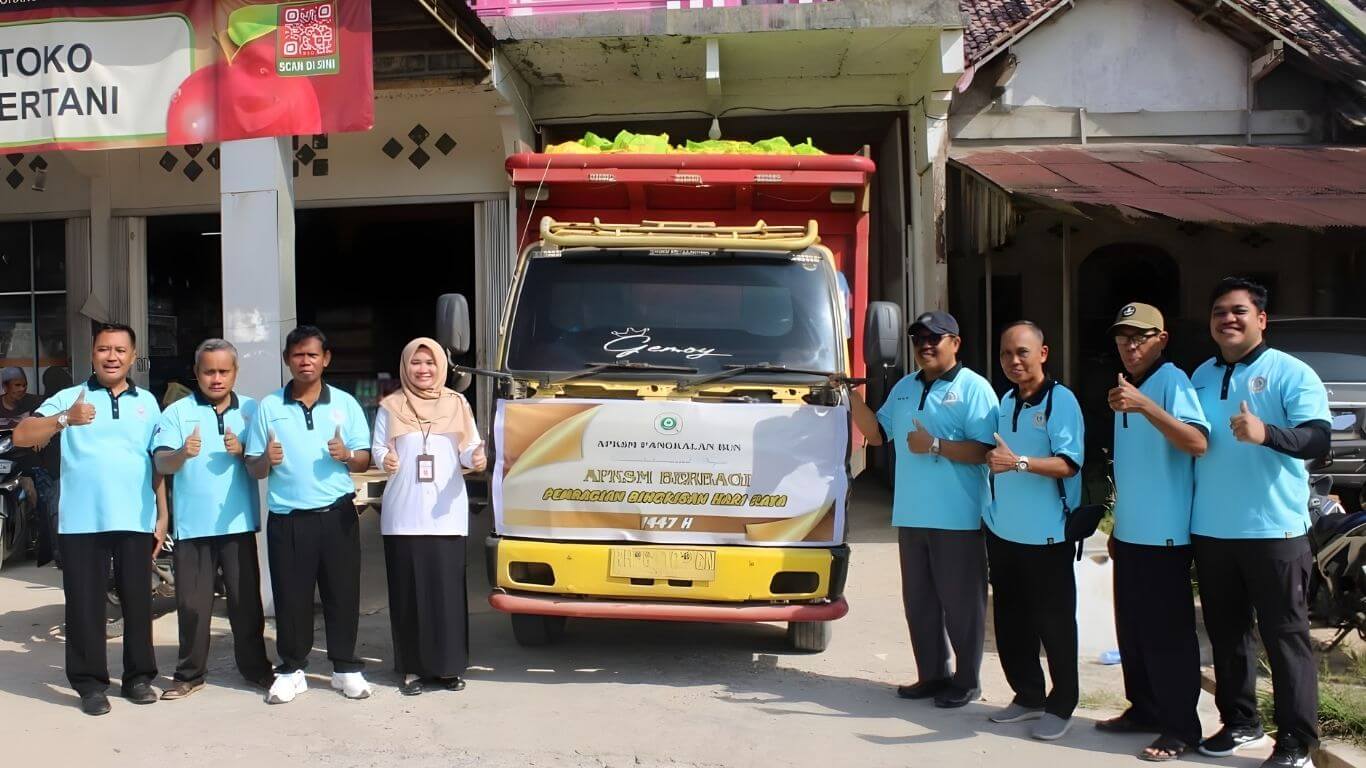
Part of the economic benefit generated through this system is then reinvested by smallholder organizations to strengthen their institutions, improve production capacity, and fund various social programs. SSR initiatives are among the most visible outcomes of this mechanism. Through them, the benefits of sustainability extend beyond plantation boundaries and flow back into the community.
In global discussions about the palm oil sector, the concept of sustainability often sounds vast and complicated. It is associated with global supply chains, certification frameworks, and the commitments of multinational corporations. But in palm-growing villages, sustainability frequently takes on a much simpler meaning.
It appears when smallholder cooperatives collect funds to support members who are struggling. It appears when smallholder organizations distribute food packages to neighbors living near the plantations. It appears in the belief that economic progress should also bring benefits to the broader community.

For Fortasbi Indonesia, stories like this serve as an important reminder that strengthening smallholders does more than improve productivity or help smallholders achieve certification. It also reinforces social networks within rural communities.
Programs such as SSR demonstrate that when smallholders gain access to global sustainability markets, the benefits can extend far beyond their farms. As evening settles over the village, the gathering slowly disperses. Residents who earlier received their packages begin returning home. Some families will likely save the supplies for the upcoming Eid celebration. Others may cook the food that same night.
Behind those simple packages lies a story rarely captured in industry statistics. It is a story about smallholders learning to manage their plantations responsibly. It is a story about village cooperatives transforming economic gains into social solidarity. And it is a story about how a global sustainability system can find its most meaningful expression at the community level.
When smallholders share the benefits of sustainability credits with their neighbors, they are sending a message that is both simple and powerful. Sustainability is not only about protecting the environment. It is also about taking care of one another.
- (0251) 8365959
- admin@fortasbi.org
- Jl. Artzimar III No.13B, Kec. Bogor Utara, Kota Bogor, Jawa Barat 16152